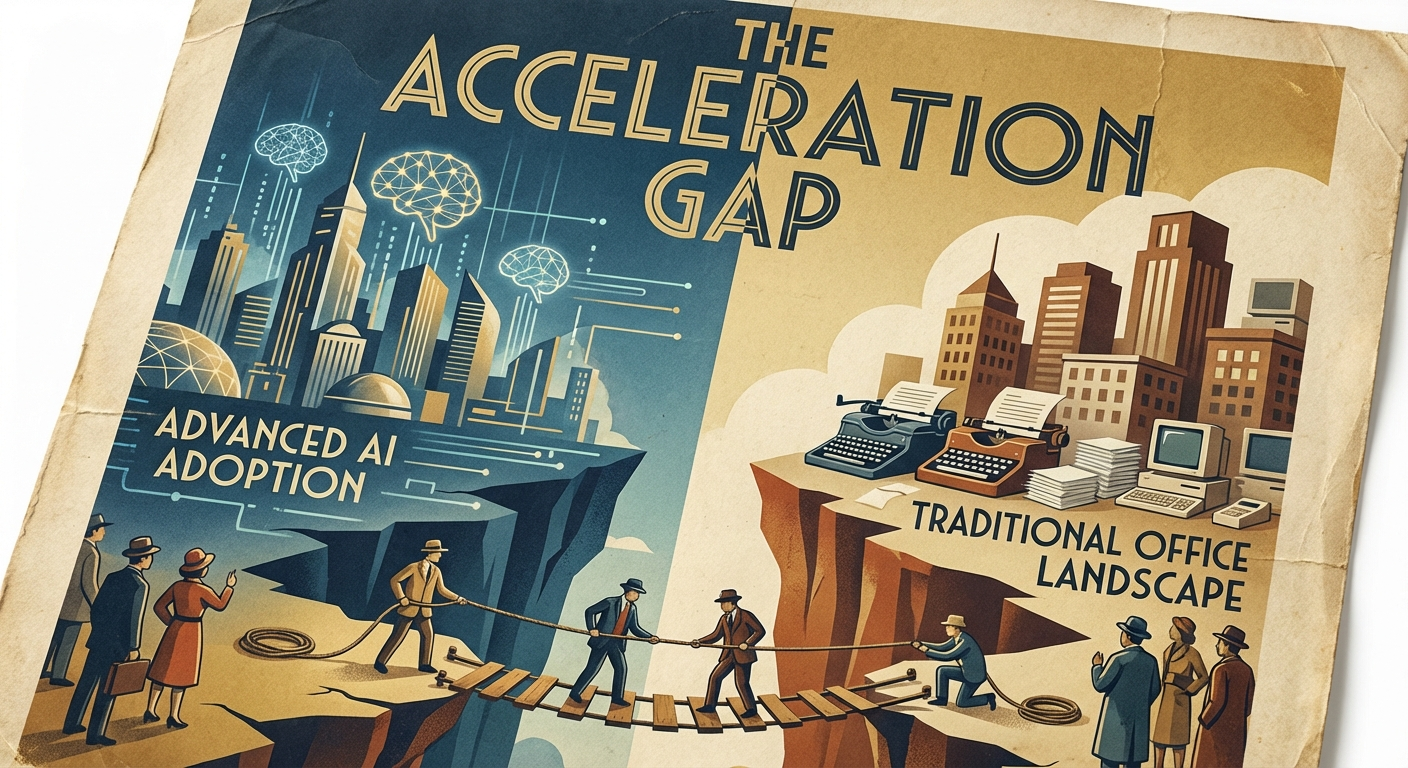
The AI Acceleration Gap: Why Your Company Might Already Be Too Late
This post is inspired by the episode, The AI acceleration gap of the AI Daily Brief. Here’s how it connects to Superintelligent:
- Acceleration Gap: This is one of the most common findings in our audits. Leaders think they're encouraging AI use, but the actual experience on the ground tells a different story. You can't close a gap you can't see.
- Permanent Divide Risk: The audit is designed to surface exactly this kind of organizational drag before it becomes permanent. Most leaders don't realize how much their own policies are the bottleneck.
The most respected AI researchers are saying they've never felt more behind. If that doesn't make you pause, it should.
Andrej Karpathy, OpenAI co-founder and one of the sharpest technical minds in AI, recently tweeted something that stopped the entire AI community in its tracks: "I've never felt this much behind as a programmer. The profession is being dramatically refactored... I have a sense I could be 10x more powerful if I just properly stringed together what has become available over the last year."
Read that again. The person who helped build GPT is saying he feels behind relative to what's possible with current AI tools.
If Karpathy feels like he's scrambling to keep up, what does that mean for your average enterprise team?
The Gap Nobody Saw Coming
New York Times columnist Kevin Roose, one of the sharpest AI observers out there, just put words to what many of us have been sensing: "I have never seen such a yawning inside-outside gap. People in San Francisco are putting multi-agent Claude swarms in charge of their lives, consulting chatbots before every decision... People elsewhere are still trying to get approval to use Copilot in Teams."
This isn't just about San Francisco tech bros versus everyone else. This is about a fundamental acceleration happening at the frontier of AI use that's creating a compound advantage for those who get it right and leaving everyone else increasingly behind.
The acceleration gap is real. And it's widening every day.
What the Acceleration Gap Actually Looks Like
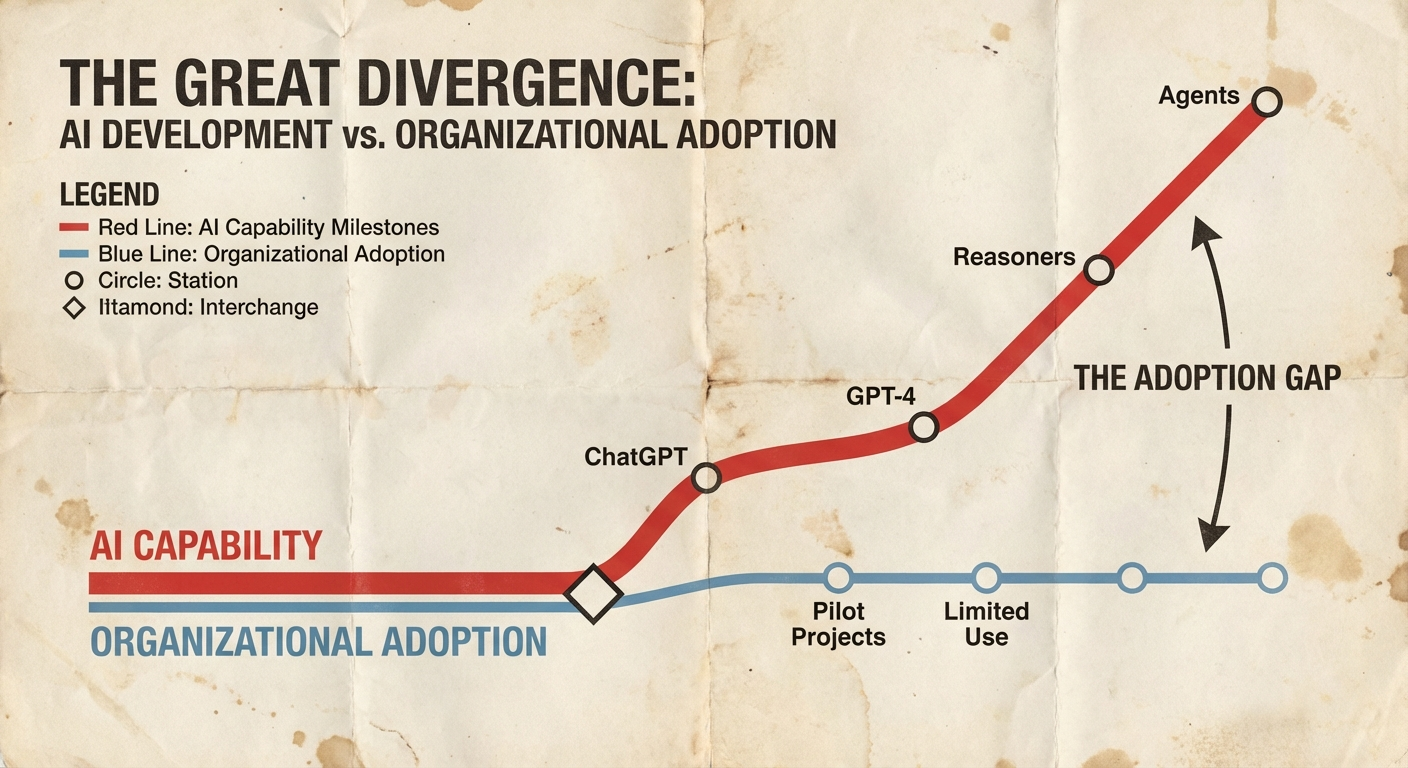
For most of the past few years, the capability difference between AI early adopters and everyone else stayed relatively consistent. Sure, some teams were ahead, but the rate of progress was fairly correlated across different user groups.
That's changed.
What we're seeing now is a major uptick in frontier capabilities combined with increasingly sophisticated deployment patterns. Multi-agent systems. Workflow automation. Code generation pipelines. Teams that figure out how to properly harness these new capabilities aren't just getting incrementally better, they're operating in a different universe of productivity.
Meanwhile, the median enterprise AI user is still asking for permission to use ChatGPT for basic tasks.
The problem with exponential environments is that linear growth becomes a compounding disadvantage. While your competitors figure out how to 10x their output with the same headcount, you're still debating whether AI-generated emails need human review before sending.
The Real Risk: Permanent Divide
Here's what should terrify every executive: Kevin Roose's warning that "restrictive IT policies have created a generation of knowledge workers who will never catch up."
This isn't hyperbole. This is the logical outcome of treating AI adoption like any other enterprise software rollout.
Think about it. While your team is going through procurement processes and security reviews for basic AI tools, competitors are deploying agent swarms that handle entire workflows end-to-end. The skill gap isn't just about knowing how to use ChatGPT. It's about understanding how to architect work entirely differently.
This post is based on The AI acceleration gap from AI Daily Brief.