Why Your AI Agents Will Fail Without Context Graphs
This post is inspired by the episode, Context graphs: AI's next big idea of the AI Daily Brief. Here’s how it connects to Superintelligent:
- Context Fragmentation: This is exactly the discovery problem we help with. Before you can deploy agents that make real decisions, you need to understand where institutional knowledge actually lives and what gaps exist. Our platform surfaces that.
- Agent Readiness Gap: Figuring out which workflows are actually ready for agents, and which need foundational work first, is the kind of prioritization question our assessments answer.
Every enterprise leader has the same story right now. They greenlit the AI budget, stood up a few pilots, maybe even hired a Head of AI. And yet when they ask their agents to do something meaningful, the answer comes back wrong, incomplete, or hallucinated beyond recognition.
The problem is not the models. The problem is that everything your agents need to know lives in Slack threads, someone's memory, and a SharePoint folder nobody has opened since 2019.
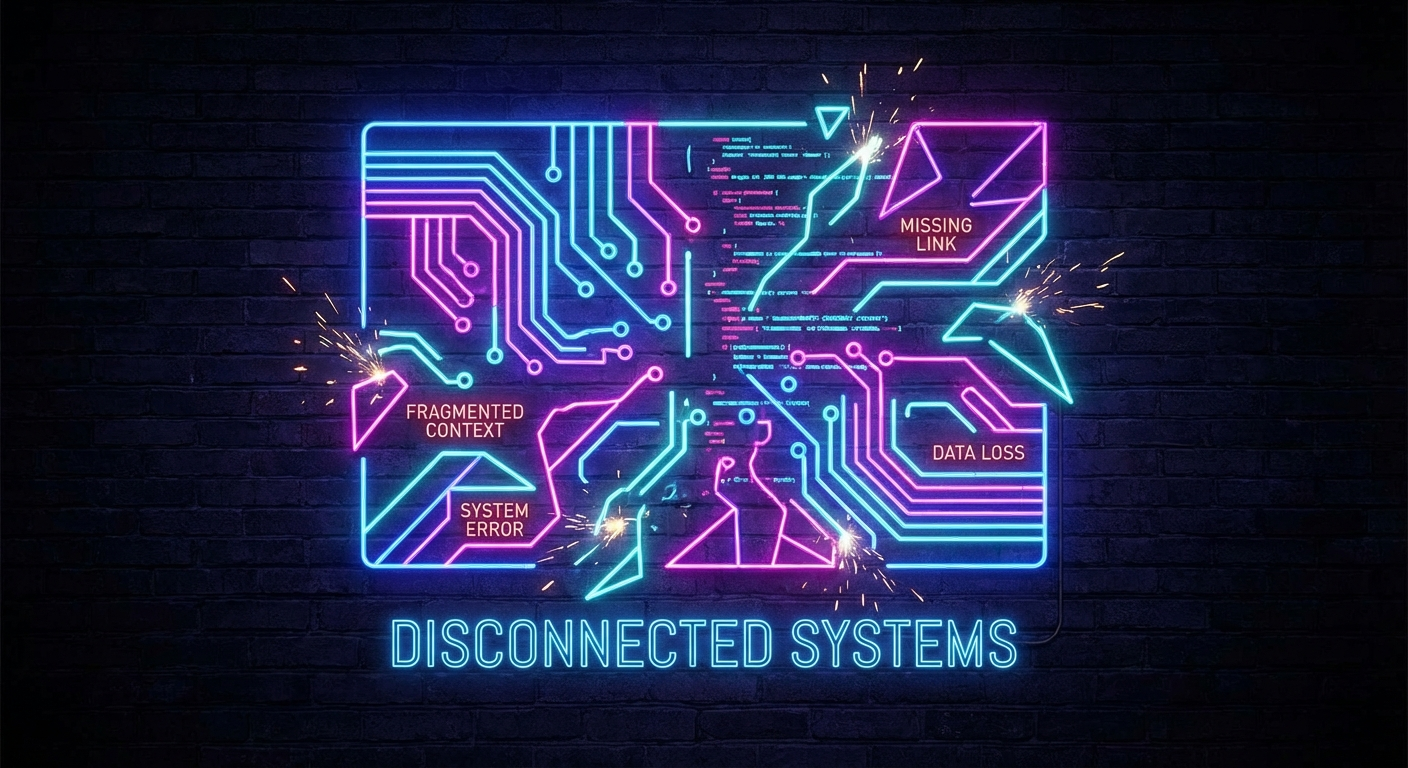
This is the context fragmentation problem. And until you solve it, your AI strategy is decorative.
The Knowledge Your Agents Actually Need
There's a concept gaining traction in investor circles called context graphs. The idea is straightforward: before you can deploy autonomous agents that make real business decisions, you need structured traces of how and why those decisions get made today.
Not process maps. Not SOPs. The actual reasoning layer. The exceptions, the precedents, the cross-system logic that currently lives in the heads of your most experienced people. When a senior ops manager knows that a certain client always needs a custom approval flow, that knowledge is invisible to any AI system. It's not in a database. It's not in a document. It's institutional memory, and it walks out the door every Friday at 5 PM.
Context graphs propose formalizing all of this into structured decision traces. Think of it as building the connective tissue between your data, your processes, and the reasoning that ties them together. Without that layer, your agents are operating blind.
Why Most Agent Deployments Fail Before They Start
The pattern is predictable. An organization buys an enterprise AI platform, points it at their CRM or ERP, and expects intelligent outputs. What they get instead is a system that can summarize data but cannot make decisions, because decision-making requires context the system was never given.
Consider a procurement workflow. The data says Vendor A is cheaper. But the institutional knowledge says Vendor A missed three deadlines last quarter and their account rep is unresponsive. A human buyer knows this. An AI agent does not, because that context lives in email threads and water cooler conversations.
This is not a model capability problem. GPT-5, Claude, Gemini: none of them can reason over context they don't have access to. The bottleneck is not intelligence. It's information architecture.
The Agent Readiness Gap Nobody Talks About
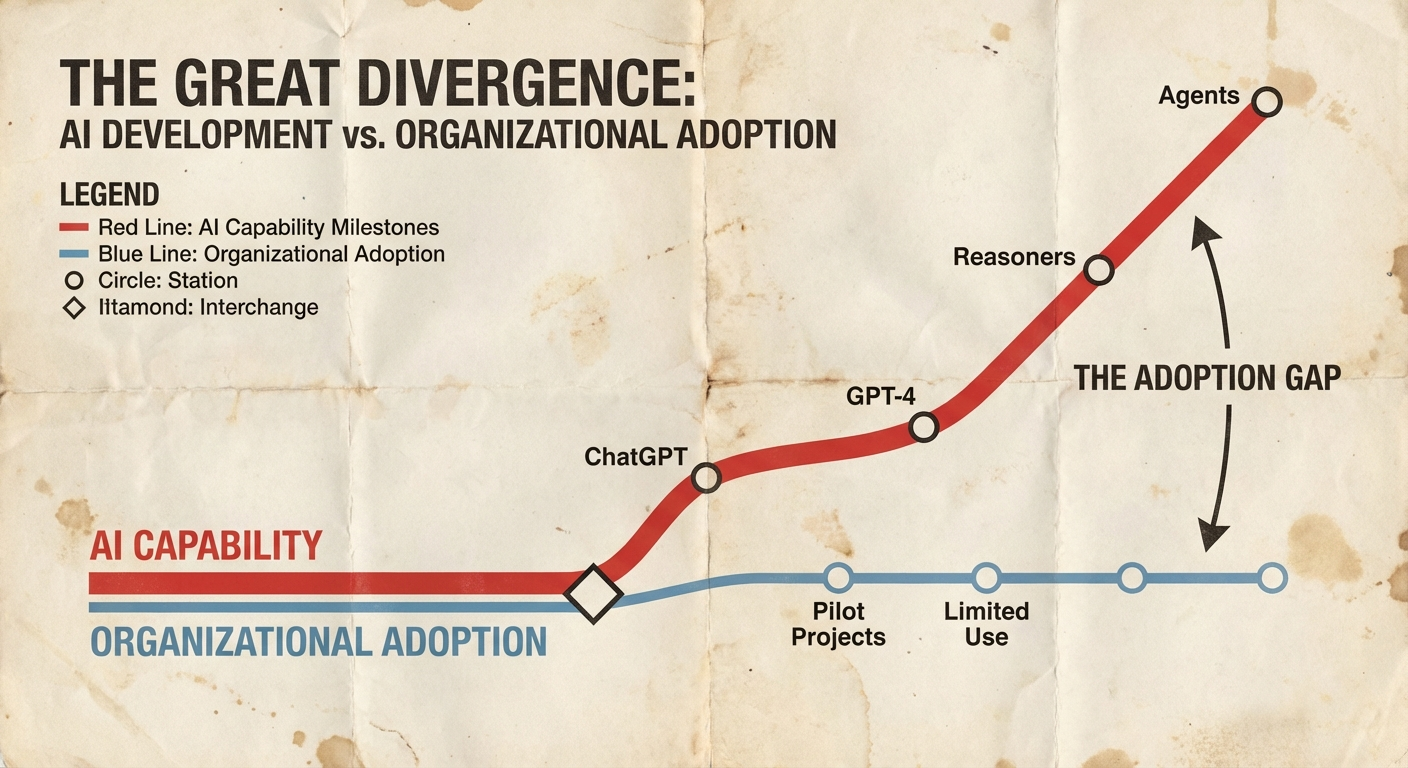
Everyone is talking about deploying AI agents. The vendor pitches are compelling. The demos are slick. But most organizations have not built the foundational layer those agents need to actually work.
It is the equivalent of buying a fleet of delivery trucks before paving the roads. The trucks are impressive, but they are not going anywhere useful.
The readiness gap shows up in three places:
- Knowledge fragmentation. Critical business logic is scattered across dozens of platforms with no unified access layer. Your CRM knows the deal size. Your project management tool knows the timeline. Your Slack channels know the real status. No single system connects them.
- Decision opacity. Most organizations cannot articulate how decisions actually get made. They have org charts and approval matrices, but the real decision pathways are informal, relationship-driven, and undocumented.
- Exception blindness. Every business runs on exceptions. The client who always gets expedited. The region with different compliance requirements. The product line with a margin floor nobody wrote down. These exceptions are the difference between a useful agent and a liability.
What Context Graphs Actually Look Like
A context graph is not a knowledge base. It is not a vector database full of chunked documents. It is a structured representation of how your organization thinks.
At its core, it captures three things: entities (the people, systems, and processes involved in decisions), relationships (how those entities interact and depend on each other), and decision traces (the actual reasoning chains that lead to outcomes).
When an investor essay floated this concept recently, the framing was specific: enterprises need to capture the "why" behind business decisions, not just the "what." The data warehouse tells you what happened. The context graph tells you why it happened that way, and what should happen next time.
This is the layer that makes agents genuinely autonomous. Without it, you have expensive autocomplete. With it, you have systems that can reason about your business the way your best people do.
The Discovery Problem Comes First
Before you can build context graphs, you need to understand where your institutional knowledge actually lives. This is the discovery problem, and it is harder than most executives expect.
The typical enterprise has critical knowledge distributed across 15 to 30 different platforms. Some of it is in structured systems like CRM and ERP. A lot of it is in unstructured channels: email, chat, shared drives, meeting recordings. And the most valuable knowledge, the stuff that actually differentiates your operations, often exists only in people's heads.
Mapping this landscape is the prerequisite to everything else. You cannot formalize what you cannot find. And most organizations dramatically underestimate how fragmented their knowledge landscape really is.
This is why the organizations seeing real returns from AI agents are the ones that invested in discovery first. They mapped their workflows, identified where institutional knowledge concentrated, and built the connective tissue before deploying autonomous systems.
The Competitive Implications Are Real
Here is what makes this urgent. The organizations that solve context fragmentation first will have a compounding advantage. Their agents will make better decisions, learn faster from outcomes, and handle more complex workflows. Every month of operation makes the system smarter.
Meanwhile, competitors who skip the foundational work will keep cycling through failed agent deployments, blaming the technology instead of the information architecture underneath it.
The gap between these two groups widens every quarter. It is not linear. It is exponential, because context graphs create a flywheel: better decisions generate better data, which improves the graph, which enables better decisions.
What To Do About It
The path forward is not complicated. It is just unglamorous compared to buying the latest AI platform.
Start with a knowledge audit. Where does critical decision-making context actually live in your organization? Not where you think it lives. Where it actually lives. Talk to the people who run the workflows, not the people who designed them on a whiteboard.
Then prioritize. Not every workflow needs a context graph on day one. Focus on the high-value, high-frequency decisions where agent automation would have the biggest impact. For most organizations, that means customer-facing operations, procurement, and financial planning.
Build the structured layer before deploying agents against it. This is the step everyone wants to skip, and it is the step that determines whether your AI investment compounds or stalls.
The organizations that get this right will not just have better AI. They will have a fundamentally different operating model, one where institutional knowledge is an asset that scales instead of a liability that retires.
This post is based on Context graphs: AI's next big idea from AI Daily Brief.