The AI Integration Paradox: Why 97% Are Missing the Real ROI

This post is inspired by the episode, The 3X payoff of deep AI integration of the AI Daily Brief. Here’s how it connects to Superintelligent:
- Proficiency Gap: This is exactly what we hear when we run assessments. The gap between what leadership thinks is happening with AI and what's actually happening on the ground is massive. Our interviews surface that disconnect with real data.
- Deep Integration ROI: The question for most organizations is figuring out where to embed AI deeply vs. where to keep it surface-level. That prioritization is what we help with, using real employee input rather than top-down assumptions.
- Manager Mandate: This is why top-down AI mandates without structured readiness assessment create friction. Leaders need to know where their teams actually are before setting expectations. That's what our platform surfaces.
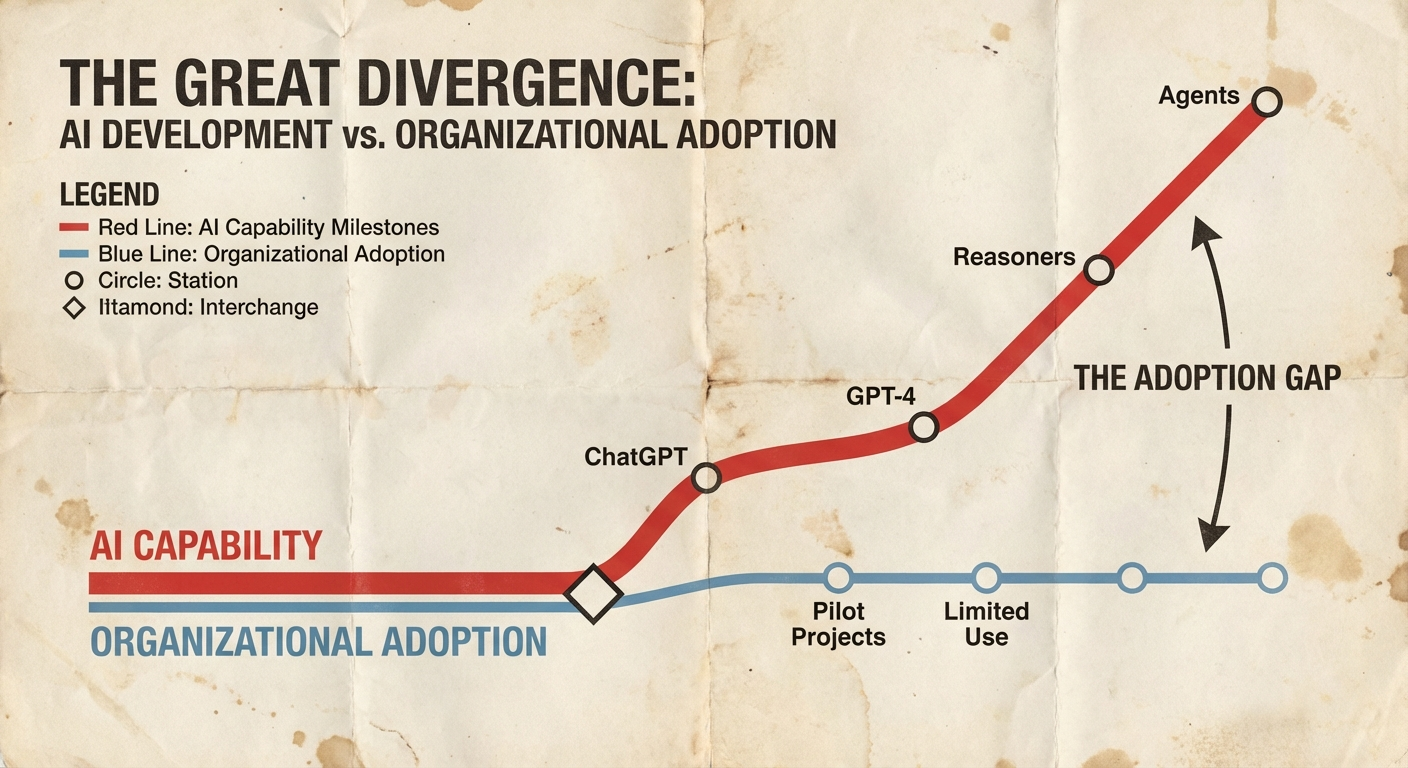
There's a disconnect happening in enterprise AI that most organizations don't even realize exists. While companies continue to invest heavily in AI tools and platforms, new PWC research reveals a stark reality: only 3% of employees are actually proficient with AI, and less than 12% of CEOs report seeing both cost reduction and revenue increases from their AI investments.
The problem isn't the technology. The models work, the platforms exist, and the potential for transformation is real. The problem is that most organizations are approaching AI integration with the same playbook they've used for every other technology rollout, and that approach is fundamentally broken for AI.
The 97% Proficiency Gap
The most striking finding from recent research isn't about the technology itself, it's about the people using it. Despite billions of dollars invested in AI tools and training programs, only 3% of employees demonstrate actual proficiency with AI in their daily work. Even more telling: 40% of employees say they'd be completely fine never using AI again.
This isn't a tools problem. It's a fundamental readiness problem that runs deeper than most organizations realize.
The data reveals a massive perception gap that explains why AI initiatives consistently underperform expectations. When researchers surveyed C-suite executives, 81% believed their company had a clear AI policy. When they asked individual contributors the same question, only 28% agreed. That's a 53-point disconnect between leadership perception and ground-floor reality.
The Deep Integration Advantage
Companies that break through the 97% proficiency barrier don't just see marginal improvements, they see transformational results. Organizations that deeply embed AI into core business processes are 2.6 times more likely to achieve significant financial gains compared to those that treat AI as an add-on tool.
The Manager Mandate Effect
The single most powerful lever for AI adoption isn't better training, more sophisticated tools, or clearer policies. It's manager expectations.
Employees whose managers explicitly expect AI usage are 2.6 times more proficient than those with access to the same tools but without clear expectations. This multiplier effect is stronger than any other factor researchers identified, including tool access alone (1.5x), formal training programs (1.3x), and clear company policies (1.4x).
The implication is profound: the bottleneck for AI adoption isn't technological or even educational, it's managerial. Organizations that successfully scale AI don't just provide tools and training; they create accountability structures that make AI proficiency a job requirement, not a job option.
The Path to Deep Integration
Breaking through the 97% proficiency barrier requires a fundamentally different approach to AI implementation. Instead of starting with tool selection and deployment, successful organizations start with readiness assessment and process design.
The organizations that achieve transformational ROI from AI understand that technology deployment is only the beginning. The real work, and the real opportunity, lies in building the organizational capabilities necessary to use AI effectively.
That 97% proficiency gap represents the largest untapped opportunity in enterprise technology today. The organizations that close it first will have sustainable competitive advantages that are difficult for competitors to replicate.
Based on insights from PWC's AI research on enterprise AI adoption and organizational readiness patterns identified in the AI Daily Brief podcast.
This post is based on The 3X payoff of deep AI integration from AI Daily Brief.