The $15 Trillion Question: Why Organizations Aren't Ready for AI Agents
This post is inspired by the episode, Claude Code Killed the AI Bubble of the AI Daily Brief. Here’s how it connects to Superintelligent:
- Enterprise Inertia Gap: That appetite gap — knowing the tools are powerful but not knowing where to start or how to get the organization ready — is exactly what our audit process surfaces.
The last three weeks changed everything. Claude Code went from a developer curiosity to representing 4% of all GitHub commits. Investors who called AI a bubble two months ago are now scrambling to understand what they missed. The New York Times is running think pieces about Soviet-level agent deployment in knowledge work.
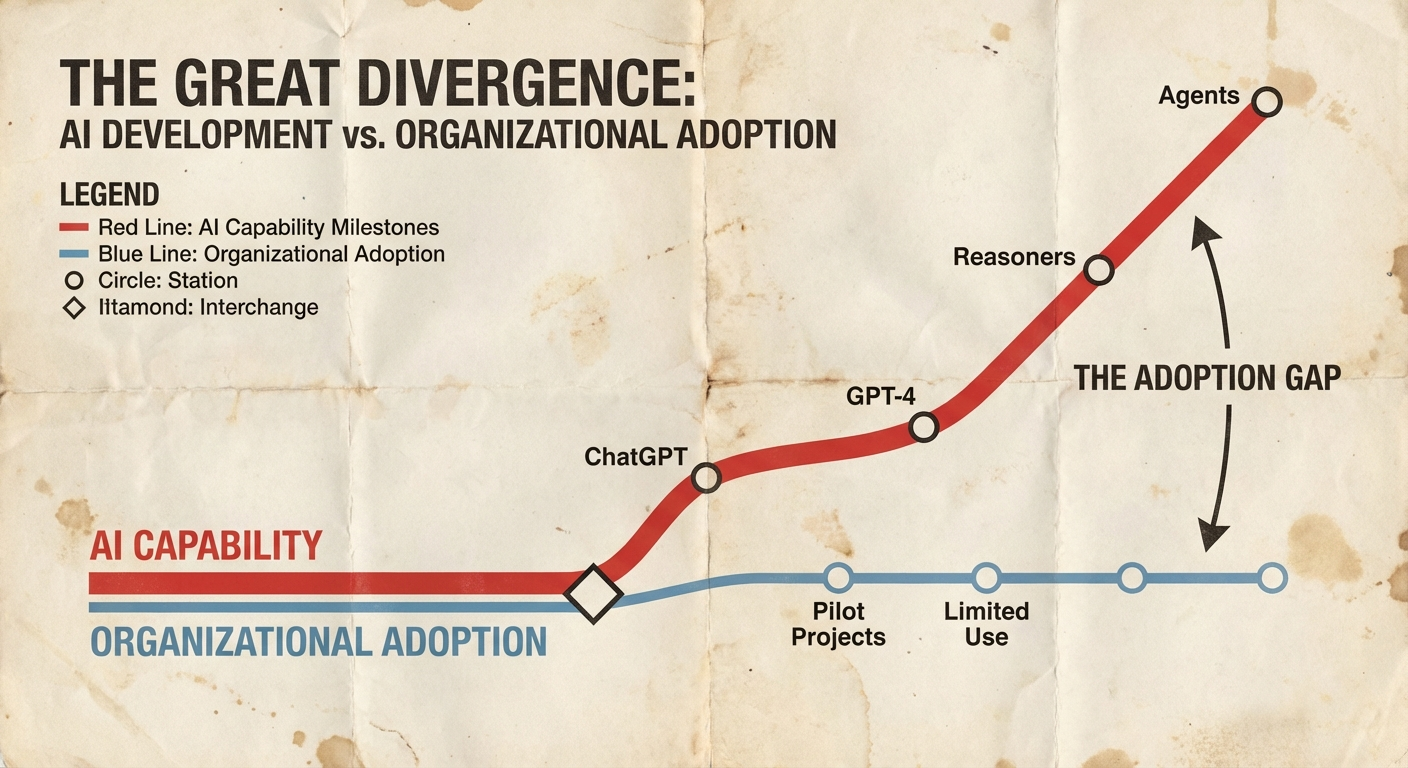
But here's the thing everyone's missing: the technology isn't the bottleneck anymore. The bottleneck is organizational appetite.
Mike Catone put it perfectly when he responded to the recent AI euphoria: "There's a big assumption contained within that the organizations these white collar workers are employed by actually have the appetite to integrate the tools. Lots of process and system change will need to be made."
That gap, between what AI can do and what organizations are ready to do, is where the real money gets made or lost.
The Capabilities Are Already Here
Let's be clear about what we're dealing with. According to Semi Analysis, Claude Code will represent 20% of all daily commits by the end of 2026. The creator of Ruby on Rails is having "anticipated nostalgia" about writing code by hand. The CTO of Vercel says his primary job is now telling AI what it did wrong.
This isn't incremental improvement. This is phase shift.
The same read-think-write-verify workflow that agents use for code applies to all information work. That's 1 billion information workers, roughly a third of the global workforce, whose jobs now have a $15 trillion automation opportunity sitting in front of them.
Where Organizations Get Stuck
The enterprise adoption gap isn't about technical complexity. It's about organizational complexity. Most companies approach AI like they approached the internet in 1995, as a curiosity that might be useful someday. They run pilots, form committees, and wait for someone else to go first.
The problem is that agent-based work isn't incremental. It's architectural. When agents can migrate data between systems with minimal friction, the traditional switching costs that SaaS companies built their moats on start to erode.
The $15 trillion automation opportunity is sitting there waiting. The question is: does your organization have the appetite to go get it?
This post is based on Claude Code Killed the AI Bubble from AI Daily Brief.