The AI Paradox: Why Your Team is Both Hopeful and Anxious About AI, and What to Do About It

This post is inspired by the episode, What 1,250 professionals said about working with AI of the AI Daily Brief.
The Real Story of AI at Work
This week, the AI Daily Brief highlighted a revealing new study from AI research firm Anthropic that offers one of the clearest pictures yet of how AI is truly landing in the workplace [1]. Using an innovative AI-powered research tool, Anthropic conducted in-depth interviews with 1,250 professionals, from the general workforce to creatives and scientists, to understand their lived experience with AI. The findings paint a picture not of a simple technological upgrade, but of a complex and often contradictory human transformation. While the optimism is real, so are the underlying tensions that will define the success or failure of enterprise AI initiatives.
What This Means for Your Organization
The Anthropic study confirms what many leaders are beginning to suspect: deploying AI is not a simple plug-and-play solution for productivity. The data reveals a workforce grappling with a profound set of strategic challenges that go far beyond technical implementation. For enterprise leaders, understanding these dynamics is the first step toward building a resilient and AI-native organization.
The central finding is a powerful paradox. On one hand, the optimism is undeniable: 86% of professionals report that AI saves them time, and 65% are satisfied with the role it plays in their work [1]. This aligns with broader industry data from firms like McKinsey, which project that AI can boost productivity by up to 25% by automating routine tasks [2]. However, this optimism is shadowed by significant anxiety. Anthropic found that 55% of workers are anxious about AI's future impact, and a staggering 69% mentioned a social stigma associated with using AI tools, fearing their work will be perceived as inauthentic or low-effort [1].
This tension reveals a critical distinction for leaders to grasp. Employees are not broadly resistant to AI; they are making sophisticated judgments about how it should be used. The study shows that professionals are eager to delegate routine, administrative work but want to preserve the core tasks that define their professional identity and provide a sense of mastery and accomplishment. They envision a future where their role evolves to overseeing and managing AI systems, not being replaced by them. This desire to protect meaningful work while automating drudgery is a powerful insight for any leader designing an AI adoption strategy.
Furthermore, the study highlights a significant "trust gap," particularly among experts. Scientists, for example, expressed a strong desire for an AI partner that could help generate hypotheses and design experiments, but they currently don't trust AI for these core research tasks. This gap between AI's theoretical capabilities and its perceived reliability for mission-critical functions is a major barrier to unlocking its most transformative potential. It suggests that simply providing access to powerful models is not enough; building trust and demonstrating reliability are paramount.
Key Questions for Your Leadership Team
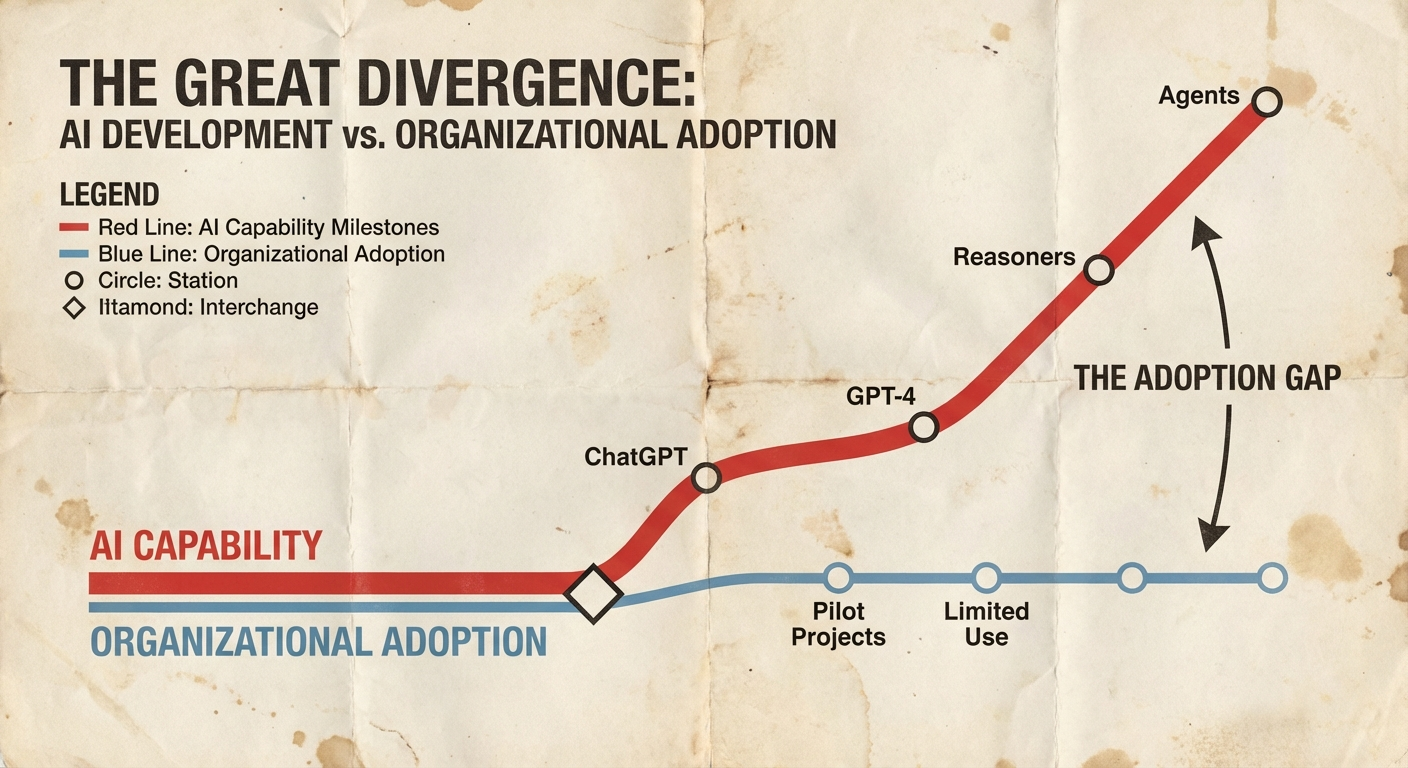
The gap between AI's potential and the on-the-ground reality requires a new level of strategic introspection. The Anthropic study serves as a diagnostic tool, and prepared organizations should be debating these questions now:
- Beyond productivity metrics, do we have a clear, honest understanding of how our employees feel about using AI in their daily roles? Where are the pockets of anxiety and stigma?
- Is our AI strategy distinguishing between routine tasks and work that is core to our employees' professional identities? Are we automating drudgery or are we threatening mastery?
- How are we actively working to create a culture where AI is viewed as a powerful tool for augmentation, not a shortcut that diminishes the value of human expertise?
- Is our upskilling strategy simply teaching employees how to use the latest tool, or is it preparing them for a future where they must manage, critique, and collaborate with AI systems?
- Where does the "trust gap" exist in our organization, and what is our plan to prove AI's reliability for the mission-critical tasks that drive our business forward?
How Leading Organizations Find Answers
The questions above can feel daunting, but they are not unanswerable. In our work with enterprise clients, we've observed a clear pattern: the organizations that successfully navigate AI transformation don't just buy technology; they build a strategic framework that aligns their people, processes, and data with their ambitions.
They move from ad-hoc exploration to a structured, holistic assessment of their capabilities. They create a common language for the executive team to debate and prioritize. Most importantly, they get an objective, data-driven baseline of where they are today before they try to build for tomorrow. This is the philosophy we've codified into our AI Readiness Audit. It's not a product pitch; it's a diagnostic process designed to provide the objective clarity that leadership teams need to move forward with confidence. It allows organizations to systematically uncover their unique blockers and identify their highest-impact opportunities.
Continue the Conversation
Every organization's journey with AI is unique. If the questions and challenges discussed in this post resonate with your team, we welcome a conversation. Our goal is to help leaders build a clear, actionable roadmap. To learn more about how a structured assessment can de-risk your AI investment and accelerate your path to value, you can explore our approach at besuper.ai or reach out to our team to discuss your specific situation.
References
[1] Anthropic. (2025, December 4). Introducing Anthropic Interviewer: What 1,250 professionals told us about working with AI. https://www.anthropic.com/research/anthropic-interviewer
[2] McKinsey & Company. (2025). AI in the workplace: A report for 2025. http://mckinsey.com/capabilities/tech-and-ai/our-insights/superagency-in-the-workplace-empowering-people-to-unlock-ais-full-potential-at-work
[3] Boston Consulting Group. (2025, June 26). AI at Work 2025: Momentum Builds, but Gaps Remain. https://www.bcg.com/publications/2025/ai-at-work-momentum-builds-but-gaps-remain
This post is based on What 1,250 professionals said about working with AI from AI Daily Brief.